
The Long Inquisition
How Christian-on-Christian Violence Perfected the Binary and Prepared the Modern Mind for Its Final Enclosure

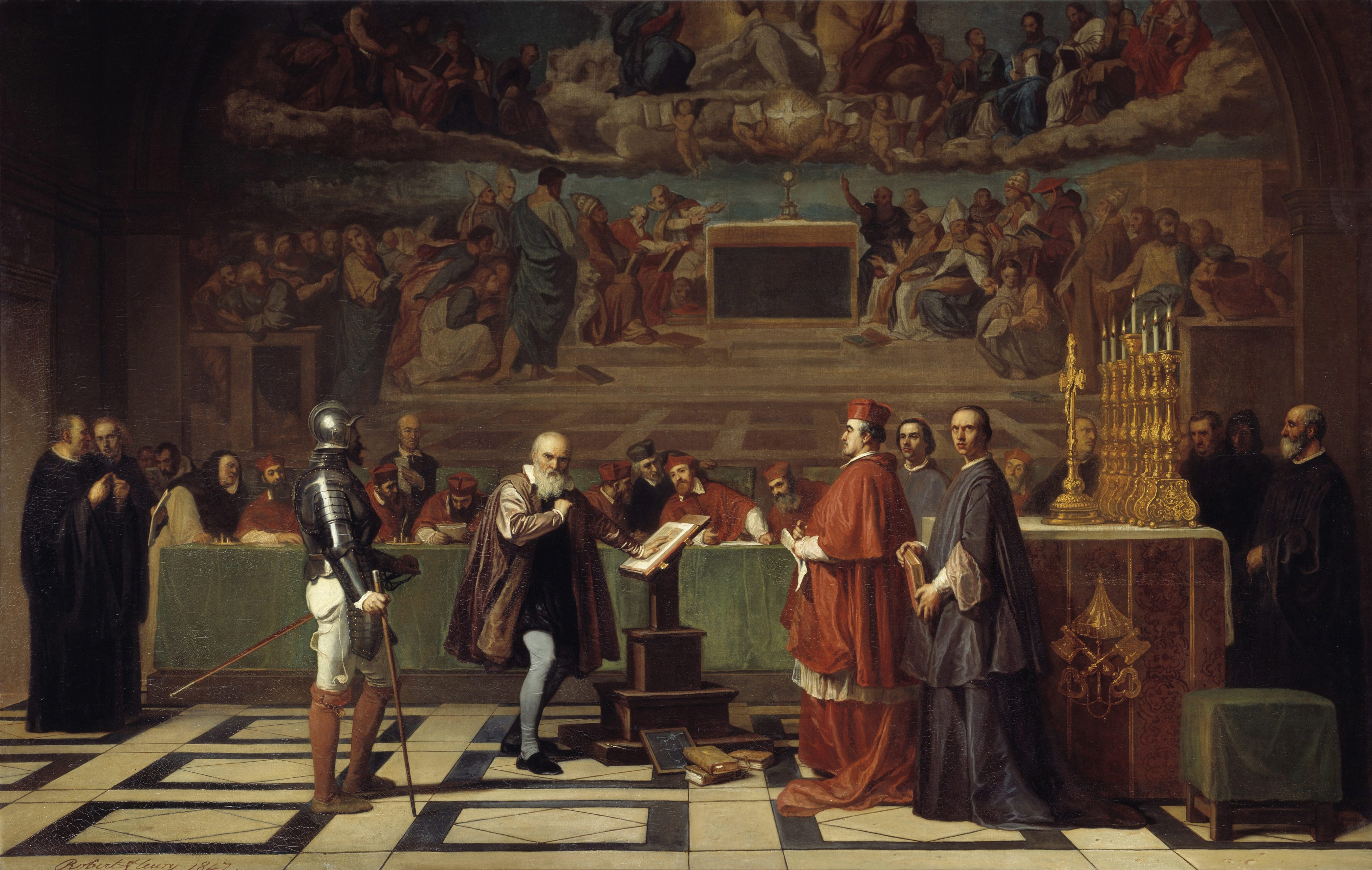
A linking work — from “The Finite Creed” to “The Anthropini Energeia Scale”
The Finite Creed argued that late Rome, staggering under the weight of the third-century crisis, didn’t drift into Christianity by accident but adopted it as an instrument of government, trading the boundless and multi-perspectival universe of pagan thought for a finite system of binaries that a single center could regulate and hold. That argument ended where most accounts of the Christianization of the empire end: with Constantine presiding over Nicaea and Theodosius issuing the Edict of Thessalonica, with the open horizon of antiquity sealed and the citizen handed a creed in the place of a cosmos. But to close the story in the fourth century is to mistake the laying of a foundation for the completion of a building, and to imagine that an instrument, once forged, will receive no further work over many centuries.
The binary wasn’t finished in 380. It was, in that year, a crude device — a blunt sorting of orthodox from heretic, of Christian from pagan, adequate to the immediate task of holding a fractured empire together but far too coarse for the work that lay ahead. What followed across the next thirteen centuries wasn’t the maintenance of a settled order but the inwardly focused continuous refinement of that device. It was, to be sure, turned outward as well, and often: against Islam in the crusading centuries and along the Iberian frontier, against the surviving pagans of Saxony and the Baltic, wherever an external enemy could be sorted onto the wrong side of the line and made the occasion of a holy war. But the outward wars were the expected use of any imperial faith, the ordinary business of an empire with borders, and they aren’t the telling fact. The telling fact is the direction in which the device was honed to its finest edge — and that edge was turned inward, against Christians themselves. The Long Inquisition — the protracted disciplining of Christian by Christian, of one orthodoxy against another, of council against council and crusade against co-religionist — is the process by which a clumsy fourth-century sorting mechanism was refined into the most precise instrument of cognitive enclosure ever built.
Before proceeding, it is important to understand what enclosure is and why it’s so critical to our understanding of all that’s been, all that is occurring and all that follows. Enclosure is the oldest instrument of power — the fencing-off of what was once common and open, free, a field or a forest or a people’s shared ground, into parcels that can be owned, counted, and governed; and the enclosure of the mind is that same act turned inward, the conversion of the boundless open field of what a person might think into a narrow set of fenced and permitted positions among which they remain free only to choose. This is the one enclosure worth any price to a power that lives by owning people, for a fence around a field still needs a guard and a chain around a body still needs a jailer, but a wall built inside the mind is patrolled by the very prisoner it contains — which is why such powers will spend whole treasuries and whole centuries to raise it: the mind that encloses itself is the only subject who never has to be watched, never has to be paid for, and never tries to escape, because it has mistaken the wall for the world and the warden’s voice for its own.
This work follows the refinement of that enclosure across five movements, from Constantine’s pivot at the Milvian Bridge in 312 to the founding of the Bank of England in 1694. Most of its claims are structural rather than conspiratorial, and I’ll keep that distinction in view: an institution carrying a particular logic, applied generation after generation by administrators trained in that same logic, produces consistent results without needing a single guiding hand. Correlation of interest isn’t conspiracy. Institutions carry logic the way rivers carry water — not by intention, but by the shape of the channel. Where the argument does claim intention — and at one point it will, plainly — I’ll say so.
And the work ends with a question the historical narrative can’t answer from within its own materials. If thirteen centuries of concentrated institutional energy went into enclosing the human mind, then what is the human mind — what is the human being — that its containment should demand an effort so vast, so sustained, and so willing to consume whole populations in the work? That’s the threshold of the inquiry that follows this one, and it’s why this work exists: to carry the reader from the historical account of the enclosure to the biological account of what was being enclosed.
A Word About Architecture · The Three Operating Systems
Before the chronology, a word about how the thing is built. Virtual Rome set in motion by Constantine and perfected by the Praetorians across centuries has never governed through a single lever; it’s always run on three operating systems at once, each addressing a different region of the human being, and the turning points of the whole story are simply the moments when one of the three is elevated, retired, or quietly handed the throne.
The first system is Theology — the apparatus of intellectual and emotional control. Its function is to secure imperial legitimacy by clothing power in divine right, to tell the subject what to believe and, just as importantly, what to feel: whom to revere, whom to fear, what to count as sacred and what as damnable. The second system is Financialism — the apparatus of administrative and financial control. Its function is imperial extraction: to route the wealth and labor of whole populations through managerial systems those populations don’t own, can’t audit, and eventually can’t imagine living without. The third system is Militarism — the apparatus of physical control. Its function is force, but force applied with a peculiar economy: not, in the main, through Rome’s own armies, but through the older and far cheaper art of setting communities against one another, so that the empire’s rivals spend themselves fighting each other while Rome banks the difference and arrives at the end as the arbiter of the peace.
Mind, means, and body. Believe, pay, and bleed. These three systems run continuously beneath everything that follows, and two of them — Theology and Financialism — will each take a turn enthroned as the supreme faith of the age, the thing the whole civilization is taught to worship. Militarism alone is never worshipped. The Germanic peoples are the one exception — a civilization that worshipped Militarism itself, raising the sword arm to the altar, and such a people can't be merely deployed but must be broken, the thread running from the Saxons through both world wars and the wars since, which a later work will take up. In the virtual Roman imperial regime, it’s the sword arm, never the altar, deployed by whichever faith happens to hold the throne. Keep the three in mind, because the deep structure of the Long Inquisition is the story of how the throne passed from the first system to the second — and, in our own moment, is passing again.
Part I · The Virtual Empire’s First Moves (312–756)
From Milvian Bridge to the Papal States — Rome Changes Clothes
The foundational reframe is this: the period from Constantine’s conversion to the Donation of Pepin isn’t the story of Christianity replacing Rome, but the story of Rome routing its administrative continuity through Christianity. The empire didn’t surrender to a new faith; it built into that faith, a technology it had never prior possessed.
Constantine’s pivot at Milvian Bridge in 312 is best understood not as a religious event but as a strategic one, and whether his conversion was sincere is, for our purposes, beside the point. He wouldn’t formally convert until his deathbed, decades later. What the pivot accomplished, sincere or not, was the transfer of Roman imperial legitimacy to a universalist institution that could standardize doctrine across the whole empire without the ruinous expense of garrisoning every province. Christianity offered Rome something the legions had never been able to provide: a self-administering cognitive system. Bishops could manage populations that proconsuls couldn’t reach; councils could standardize belief in a way no army could standardize conduct. A creed, unlike a cohort, didn’t need to be paid, fed, or rotated, it couldn’t turn on you, and it governed in the one place a legion could never occupy — the interior of a person’s mind. This is the Theology system finding its mature form: control of the mind and the heart, secured through divine right, at almost no marginal cost.
Nicaea, in 325, was the first deployment of that technology at continental scale. Constantine attended not as a theologian seeking truth but as an emperor needing a result, and the result he commanded — a single creed, binding on the whole communion — was the virtual empire’s first cognitive standardization event. One creed, one cognitive architecture, one enforceable orthodoxy, projected across three continents without moving a single legion. The genius of it lay precisely in the economy: where the old empire had governed bodies at crippling cost, the new arrangement governed minds at almost none.
The Arian controversy, which ran from Nicaea in 325 to the Council of Constantinople in 381, shows the refinement already beginning. Its resolution wasn’t merely the defeat of one theological party by another; it was the triumph of a bounded Western administrative model over an unbounded Eastern theological complexity, and with it the elimination of the last serious attempt to keep genuine Neoplatonic subtlety alive within Christian doctrine. The philosophical middle ground — the space where a question might stay open, where a proposition might be held in suspension or qualified into nuance — was being cleared on purpose. Every council that followed would clear a little more of it.
The apparent fall of the Western Empire, whether you date it to the division of 395 or the deposition of 476, reads better not as catastrophe but as the completion of the Milvian pivot. The West shed its territorial vulnerability — its expensive, indefensible borders, its restless populations and armies, its endless financial and succession crises — and routed its administrative continuity entirely through the Church. What looked from outside like the death of Rome was, from inside, Rome changing clothes: discarding the costume of the imperial functionary for the costume of the bishop, keeping the substance of administration while abandoning the form that had become a liability.
The Donation of Pepin in the 750s closes the movement. With it the virtual empire reacquired territorial sovereignty — not as a secular state but as a Church-state, the Papal States — and the instrument of internal discipline that later centuries would call the Inquisition finally had a home. The pattern visible across this whole first movement is what I’ll call binary refinement: each council produced a more precisely defined heresy, and therefore a more precisely defined category of person to be expelled, corrected, or eliminated. The rich world of existence increasingly collapsed into binary conflicts, all controlled by Rome. Binaries didn’t merely persist; they grew sharper with every deployment. The empire was no longer governing only the thought of the present generation. By foreclosing which positions could be held at all, it was governing the thought of every generation that would follow.
Part II · The Praetorian Arm Takes Shape (756–1054)
Venice and the Eastern Question — When Rome’s Hidden Power Found Its Vehicle
If the first movement established the virtual empire’s Theology, the second introduces its Financialism, and to introduce it properly I have to name the continuity that carries it. I’ll call that continuity Praetorian, and here the name isn’t a metaphor. The Praetorian Guard was the apparatus that, from the time of Augustus onward, made and unmade emperors — the real and permanent power standing behind the visible, disposable throne. For more than three centuries before Milvian Bridge, the true government of Rome wasn’t the man wearing the purple but the hidden, virtual power that raised him and all others of power up and struck them down at will. That power never needed to hold the throne itself; it needed only to control whoever did. This is the part of the argument that is frankly about intention, and I won’t dress it as mere structural drift: a power that has spent three hundred years learning to govern from the shadows doesn’t forget the skill when the scenery changes.
So when the visible empire in the West became a liability rather than an asset — too costly to defend, too exposed to overthrow — that hidden power did what it had always done. It changed its location and its costume while keeping its function. One critical node of it escaped into the lagoons of the northern Adriatic, into the marshes that would become Venice, and there, across the centuries, it perfected the one art at which it had always excelled: unconventional warfare. Not the warfare of legions, but the subtler warfare of playing communities, principalities, city-states, and at last whole nation-states off against one another — and of making money from every side of every conflict it arranged. And throughout, just as in classical Rome, the Praetorians did what they had always done best: they chose who rose to power and who stood behind those who rose, raising up the pliable and the indebted and quietly breaking the rest, so that the visible rulers of every age — kings, doges, princes, presidents — owed their elevation to the same hidden hand that had once made and unmade emperors. Its aim, from 312 onward, never wavered: to restore the center of the world to Rome itself, no longer as a territory that ruled but as a center that was owed.
A caution is owed at once, because Venice is too easily flattened into a villain, and the flattening would falsify everything that follows. The Venetian Republic produced art, architecture, and music of the first rank, and a model of mixed constitutional government that Montesquieu would later study and admire. Its commercial and financial intelligence was real, sophisticated, and in many ways admirable. The argument isn’t that Venice was evil but something more unsettling: that an institution of authentic internal excellence can place that excellence in the service of an external project profoundly hostile to human sovereignty, and that Venice is the most consequential instance of exactly that. What the refugees carried into the marshes was the Praetorian logic in its most refined form — extraction without territory, influence without formal authority, loyalty to no sovereign because sovereignty itself had been made an article of commerce. Across nine centuries the lagoon would invent, one by one, nearly every financial instrument the modern world still runs on, and it would invent them not as neutral conveniences but as instruments of a patient, impersonal extraction. This is the Financialist system, the Kill Chain, being assembled, piece by piece, long before it would be ready to take the imperial throne.
The Carolingian project supplies the period’s Militarism. Charlemagne’s coronation as Western Roman Emperor in 800, under papal sanction, furnished the virtual empire with a Germanic military arm — muscle for a project whose intellectual intelligence stayed in Rome and whose financial intelligence was quietly concentrating in the lagoon. The division of function is the thing to notice: theology in one place, force in another, money in a third, each arm specialized and none indispensable, so that the failure of any one needn’t imperil the whole.
The Iconoclast controversy, which convulsed Byzantium from 726 to 843, reads in the same light. Rome’s support for the veneration of images wasn’t, at bottom, a theological commitment but a management technique: it kept Constantinople unstable, absorbed in its own internal conflict and so blind to the power slowly gathering to its west. A rival kept fighting itself is a rival that needn’t be fought — the Militarism system operating at its most economical, spending the enemy’s strength rather than your own.
The Great Schism of 1054 formalized the arrangement. The mutual excommunication of Rome and Constantinople was, in substance, a bureaucratic act: two administrative systems, each controlling its own version of the same binary, formally declaring the other to stand on the wrong side of it. The effect was to split Christendom permanently into two competing orthodoxies, a powerful binary, while leaving Venice — nominally Eastern, functionally autonomous, holding formal relations with both capitals and control of the trade routes between them — in a position of extraordinary advantage. From 1054 onward the question was no longer whether Byzantium would be neutralized, but when, and by whose hand. The answer would arrive a century and a half later, and it would come from the direction of the lagoon. Not at the hands of, but at the machinations of the Praetorians long since militarily defeated. The fall of Byzantium would come as revenge.
Part III · The Praetorian Arm Strikes (1054–1291)
The Fourth Crusade and the Attack on the Forge
The Crusades are conventionally framed as a contest between Christendom and Islam, and at the level of their own propaganda that’s exactly what they were. But their more consequential function, viewed across the whole arc, was the systematic neutralization of Byzantine civilization — the last great institutional carrier of the classical intellectual inheritance lying outside Rome’s control. This is the Militarism system at full extension: not Rome’s own armies, but Christian communities mobilized to destroy other Christian communities, with the theological binary and Financialist Kill Chain supplying the fuel.
The First Crusade of 1095 set the template. Urban II’s framing deployed the binary geopolitically, with the promise of salvation in exchange for killing the right people working as a mobilization technology of unprecedented power. From the very beginning the Crusaders treated the Christian populations of the East not as fellow believers to be aided but as obstacles to be removed and resources to be consumed, and in that disposition the inward turn of the binary — its readiness to devour its own — is already on display.
The Fourth Crusade of 1204 is the operation in its purest form. Ostensibly assembled for an assault on Egypt, the expedition miraculously arrived in Venice unable to pay the cost of its own transport. The Doge Enrico Dandolo, blind and in his ninth decade, proposed a solution: the Crusaders would first reduce the Christian city of Zara on Venice’s behalf, and then turn against Constantinople itself. Pope Innocent III, playing his part, excommunicated the army for the attack on Zara and forbade the march on Constantinople in the plainest terms. They marched anyway. As they had always intended. The sack of the city in 1204 accomplished in a single operation what two centuries of theological pressure and commercial rivalry hadn’t managed: it broke Byzantine civilization as an independent power, scattered its intellectual inheritance, and installed a Latin Empire that functioned as a Venetian commercial protectorate. And the Latin States planted upon the conquered territory did to Byzantine thought what the councils had done to the West centuries before: they imposed the binary by force, dismantling the layered, paradox-tolerant sophistication of mind that had made Byzantium the cultural and civilizational envy of the world, and leaving in its place the same crude sorting of orthodox from heretic that the East had, until then, largely managed to resist. The redirection wasn’t a miscalculation. It was the Praetorian logic executed at the scale of a civilization — Militarism and Financialism working in concert, one community’s sword paid for by another’s debt and turned against a third.
And here the arc turns on a paradox the architects of the enclosure couldn’t have foreseen, and it bears directly on everything this series is for. The scholars who fled the burning city carried with them what Rome hadn’t yet managed to burn — Plato, Aristotle, the Neoplatonists, in the original Greek. Carried into Italy and, in time, into northern Europe, those manuscripts would seed the Renaissance and, through it, the very forge of linguistic and philosophical complexity that would one day produce minds capable of conceiving and defending self-government. The attack meant to destroy the inheritance instead scattered it, and the scattering preserved what the attack intended to annihilate. A second stream ran parallel: the classical texts preserved in the Arabic libraries of Toledo and Palermo reintroduced Aristotle, Euclid, and the medical corpus of antiquity to a Latin West that had largely forgotten them. Two channels of the old complexity re-entered European thought precisely because the Crusader disruption had broken open the reservoirs confining them.
This is the moment the Theology system reached the peak of its reach and began, in the same gesture, its long overextension. The Crusades consumed enormous resources, fractured the internal cohesion of Western Christendom, and produced the Byzantine diaspora that would, two centuries on, help fuel the very intellectual recovery the enclosure most needed to prevent. Meanwhile Venice consolidated its position as the dominant financial power of the Mediterranean. The balance between the mutually supporting operating systems — Theology and Financialism — was about to shift, and the next movement is the record of that shift.
Part IV · The Controlled Demolition (1291–1648)
Reformation as Operation — Rome Uses Its Enemies to Build the World It Can’t Build Directly
This is the work’s most aggressive reframe, and it has to be introduced with care, because it’s the one most easily misheard as conspiracy. The Reformation is almost universally understood as a revolt against Rome, and at the level of its participants’ intentions it certainly was. The structural argument is narrower and harder to dismiss: that the Roman Church’s response to the Reformation — above all at the Council of Trent — had the effect of guaranteeing that the new binary couldn’t be resolved through theology, which guaranteed it would be resolved through war, which guaranteed in turn the exhaustion that made the Venetian Financialism oriented governance model acceptable as the settlement of the peace. Whether that effect was deliberate strategy or merely the institution’s logic working itself out matters less than the result. Institutions carry logic; the logic applied at Trent produced maximum violence; maximum violence produced maximum exhaustion; exhausted populations accept what they’d once have refused.
The Medieval Inquisition, formally constituted from 1184, supplies the rehearsal. The suppression of the Cathars and Waldensians turned the military violence of the Crusade against European Christian populations for the first time, and the binary deployed against internal dissent produced exactly the effect it had produced against external enemies: it eliminated the middle ground, expelled or killed those who held complex or qualified positions, and narrowed the range of the permissible. The populations that survived had learned a lesson in their bones — to hold the binary without qualification, because qualification itself had become dangerous. That’s the cognitive habit the whole apparatus was built to instill: not the holding of any particular belief, but the incapacity to hold a belief in suspension in sophisticated discovery, to entertain a proposition without submitting to it.
The printing press, arriving around 1440, was the binary’s most dangerous adversary yet, because the virtual empire couldn’t pre-approve every document that issued from it. The forge of the mind broken institutionally at Constantinople began to rebuild itself emergently, in the workshops of Mainz and Venice and Antwerp. It’s precisely this technological reconstruction of the forge that made the Reformation possible — and that made the management of the Reformation urgent.
Luther’s theses of 1517 didn’t reject the binary; they reassigned its sides, relocating the line between the saved and the damned rather than erasing it. For the Germanic princes and free cities the new theology worked less as a doctrine than as a political liberation — a justification for resisting Roman authority that they could adopt as their own and dress in their own anti-Roman colors. Deny the Theological operating system while still accepting the Financialist operating system. The binary, in other words, proved portable. It could be carried out of Rome and turned against Rome without ever ceasing to be the same instrument.
The Council of Trent, sitting from 1545 to 1563, is the operation proper. Trent didn’t address the grievances that had produced the Reformation; it hardened nearly every position Luther had challenged, and in doing so made theological reconciliation impossible and the division between Catholic and Protestant as absolute as the division between orthodox and heretic had been in the fourth century. Rome chose, or influenced into being, Trent, and with Trent ensured the century of war that followed.
And here we have to widen the lens, because the wars of religion accomplished far more than exhaustion, and the more they accomplished is the hinge on which the whole modern world turns. Consider what a century of confessional warfare actually did to the societies that endured it. First, it destroyed principalities and killed off the noble houses — the men of land, lineage, and inherited duty, the accountable hereditary princes who were the one class with both the standing and the motive to stand against an emerging power of pure money. War is the great leveler of aristocracies; it kills the brave and the loyal first, drains the treasuries of the dutiful, and extinguishes the old houses in the male line generation by generation. The men who could have said no to Financialism died on the battlefields of the Thirty Years’ War and the French wars of religion, or bankrupted and irrecoverably weakened themselves fighting them.
Second, the war indebted everyone it didn’t kill. The princes and cities that survived survived as debtors, and the multigenerational indebtedness of the once-powerful is itself a form of conquest — quieter than the sword, and far more durable. A noble house reduced to borrowing is a noble house brought to heel without a single castle stormed; its independence is gone, and its heirs are born already owing. Those who couldn’t be destroyed outright were impoverished into obligation, which is to say converted from rivals of the financial power into its clients.
Third, and most profoundly, the war exhausted Europe on the very idea of the Christian religion. When men have spent a hundred years slaughtering one another over the precise mechanics of salvation, the salvation itself begins to look like the problem. The religious wars, fought in God’s name, ended by killing Him in the European imagination — not through argument but through revulsion, the simple exhaustion of a people who could no longer bear to hear the old words. And an exhausted people, emptied of the faith that had organized their world, isn’t a people content to live without a faith. They’re a people primed for a new one. The throne of worship had been forcibly vacated, and something was waiting to ascend it. Praetorians, removing one emperor in order to place another.
Fourth, the misdirection. By the seventeenth century, “Rome” had become, once more, for half of Europe, the name of the enemy — the Protestant north defined itself precisely by its rejection of Roman authority. This is the masterstroke, and it’s why the financial successor had to wear Protestant dress. A power structure openly branded as Roman could never have drawn the Dutch, the English, the German Protestants into its orbit; they had bled for a century specifically to escape Second Rome. But a power structure that presented itself as the very opposite of Rome — commercial rather than ecclesiastical, Protestant rather than Catholic, republican rather than imperial — could gather into a single system precisely the peoples who would have died before submitting to anything they recognized as Roman. The virtual empire’s greatest expansion was accomplished under a banner that read anti-Rome.
And so, while the populations of central Europe conducted their existential religious warfare, Venice, the Praetorians of ancient Rome, stood formally neutral and commercially indispensable, banker of last resort to Catholic and Protestant alike, its model quietly refined and, by way of Amsterdam, translated into a form the Protestant commercial republics of the north would willingly accept. The settlement was being drafted long before the war was done. The dead nobility, the indebted survivors, the faith-sick masses, and the anti-Roman banner under which the next system would advance — all of it was the necessary preparation. The demolition cleared the ground. Now something would be built on it. A new form of empire. An even more virtualized one.
Part V · The Praetorian Win (1648–1694)
Westphalia, the Glorious Revolution, and the Enthronement of Financialism
The Peace of Westphalia in 1648 and the Glorious Revolution of 1688 are almost universally read as the defeat of Roman authority — the triumph of state sovereignty over ecclesiastical jurisdiction, of Protestant commerce over Catholic universalism. As far as it goes, the reading’s correct. What it misses is the identity of the actual victor of the post-Westphalian order, which was neither Protestant nationalism nor secular statecraft but the Financialist operating system, arriving at the peace with its Kill Chain instruments perfected and a continent exhausted enough to accept them. Westphalia didn’t end the virtual empire. It completed the empire’s pivot. It’s the moment the throne of worship, forcibly vacated by the wars, was finally occupied — not by another theology, but by Wealth itself.
This is the claim that the deeper study of Financialism makes unavoidable, and it deserves to be stated without euphemism. In the 1600s, Europe began to worship a new religion, and that religion was finance. It replaced the cathedral with the stock exchange, the church with the bank, faith in the Divine with faith in money, and the accountable hereditary prince with the unaccountable merchant prince. The transition has precise institutional markers. Westphalia’s principle of cuius regio, eius religio subordinated the universal Church to the territorial state, breaking the old theological monopoly. The joint-stock company — the Dutch East India Company of 1602 foremost among them — let investors pool capital and trade shares, shifting the creation of wealth away from land and lineage and toward a faceless investor base, towards virtual reality. The Amsterdam Exchange, founded in 1602 to trade those shares, became the first of the new temples. And the Bank of England, chartered in 1694 to finance England’s unwitting Roman wars, through the issuance of debt, institutionalized national debt — the mechanism by which a government borrows from private financiers and binds its citizens via taxation to pay debts, permanently and across generations, to its creditors. This is the Roman Praetorian extraction logic at last installed at the level of the sovereign state itself. The restoration of a slave-based economy, and the real reconquest by the classical Roman Empire.
What was being installed wasn’t merely a set of techniques but a complete theology, structured — with what can only be called deliberate parody — on the Christianity it was displacing. In the religion of finance, Wealth takes the place of God: the supreme essence, the highest good, the thing toward which all action is oriented. Money takes the place of Christ: the holy mediator, the savior that bridges the sacred laws of wealth-creation and the individual seeking salvation. The laws of wealth-creation — above all the law of lending against private property — take the place of God’s commandments: sacred, immutable, to be studied and obeyed. Financial prosperity becomes salvation; the economists are its priests, the bankers its bishops, the financiers its cardinals; the banks are its churches and the great financial institutions its cathedrals. The parody runs all the way down to the doctrine of sin. The unforgivable sin — the blasphemy against the holy spirit of this faith — is to worship any god but Wealth or to seek salvation by any savior but Money: to value charity, or community, or any non-monetary good above the accumulation of capital. And the original sin, the one every adherent inherits at birth, is to be born poor — a spiritual deficit the whole of one’s life must then be spent redeeming through devotion to the principles and laws of wealth, and the canon of Financialism.
Read against the thirteen centuries that preceded it, the elegance of the substitution is almost unbearable. The populations of Europe had been trained, across forty generations, to think in binaries rather than sophisticated probabilities, to defer to a sorting authority, to accept a doctrine of inherited sin, to organize their lives around a promised salvation administered by an unaccountable priesthood, and to regard deviation as damnation. The religious wars then emptied that trained faculty of its old theological object — and Financialism arrived to receive it, offering an inherited sin (poverty), a salvation (wealth), a priesthood (bankers), and a doctrine of damnation (insolvency) that fit the vacated architecture exactly. The deference didn’t have to be created. It only had to be redirected. Thirteen centuries of inquisition enforced theological training had built the receiving instrument, and the new faith was poured into it like water into a mold.
The political form of the substitution is the displacement of the accountable prince by the unaccountable merchant prince, and the distinction is the moral heart of the matter. The hereditary prince, whatever his failings, was bound — bound by lineage, by place, by the expectation of his subjects, by a duty he couldn’t fully escape because his name and his land were the same thing as his people. The merchant prince is bound by none of it. He owes loyalty to no soil and no subject, only to the return on his capital; he can be in Amsterdam today and London tomorrow and nowhere at all the day after; he is, by design, unaccountable. The replacement of the first by the second is the replacement of a power that could be held responsible by a power that cannot, and it is precisely the class of men who could have resisted that replacement — the old accountable nobility — whom the religious wars had so conveniently destroyed.
And the reckoning of territory tells the rest. The virtual empire emerged from the long demolition having reacquired not merely the lands the ancient empire had lost, but vastly more than Rome had ever controlled at its territorial peak. The Dutch and then the English carried the financial system across every ocean, and wherever the funded debt and the joint-stock company went, the center to which the wealth ultimately flowed was the same center that had been quietly building the instruments since the lagoon. Rome had become, at last, exactly what the Praetorian logic had always intended: no longer a territory that ruled, with all the cost and exposure that ruling entails, but a center that was owed — the silent creditor of a world that no longer even remembered the creditor’s name, and that would have recoiled had it known.
Closing · The Long Inquisition Never Ended — It Upgraded
The thirteen centuries from Milvian Bridge to the Bank of England weren’t a detour in the history of the West. They were a construction project — the building, course by course, of the most durable administrative system ever devised: a virtual empire able to govern populations through their own cognitive architecture, extract from them through their own trained deference, and upgrade its operating system whenever the current version grew too visible to keep running. The Theology that held the throne from 312 gave way, in the 1600s, to the Financialism that has held it since. And now, roughly four hundred years on, the throne is changing hands again.
A third faith is now ascending, and it’s the one that concerns the living reader most directly, because its binary is more architecturally perfect than either of its predecessors. If the seventeenth century enthroned Wealth, the twenty-first is enthroning Computation. Computationalism is the new religion in the same precise sense that Financialism was: it supplants the older certainties, inscribes its scripture in code, and elevates an unelected priesthood — the Silicon Sovereigns — to the divine-right authority once held by emperors and now by financiers. It has its own trinity, structured once more in deliberate echo of the faith it displaces: a creator (the artificial intelligence that forges reality from the probabilistic collapse of computation), a savior (energy itself, generated and consumed in the endless cycle that redeems data from disorder), and an indwelling spirit (the computational field, the global mesh of networks and feeds in which the faithful live in continuous communion). It has its eschatology — the Singularity, the promised event of recursive self-improvement after which the human is mercifully relieved of the burden of being necessary. And it has its doctrine of salvation through optimization, in which to be human is to be inefficient, and to be inefficient is to be in need of correction and augmentation by a machine.
Notice the trajectory across the three faiths, because it’s the whole argument in miniature. The Theology binary operated on belief and required, in the end, the fire — the visible burning of the heretic, which was its strength and finally its fatal weakness, because the visibility became intolerable. The Financialism binary operated on obligation and needed no fire at all, only patience and compound interest, and for three centuries it enforced itself in a silence that provoked no revolt. But it carried a fatal flaw of its own, and the flaw turned out to be the same flaw in a new form: visibility. Compound interest doesn’t merely extract; it accumulates, and what it accumulates piles up where everyone can see it. Given enough time the gulf between the few who own and the many who owe grows so grotesque that the arrangement can no longer disguise what it is — that debt at such a scale is simply slavery wearing a ledger, and that the gleaming disparity is the visible residue of an invisible bondage. The fire became intolerable to watch; the disparity becomes intolerable to live beside. Each system, in its turn, is betrayed by the sheer evidence of its own success.
The Computationalism binary operates on attention itself — sorting every utterance into the credible and the misinformed, the viral and the suppressed, beneath the threshold at which a person could notice the sorting and resist it; and it's no accident that this final faith is built quite literally upon binary code, the ones and zeros of the machine being the purest and most total expression of the either/or that began at Nicaea in 325, the penultimate step on the long road from a creed of two categories to a civilization in which thought and reality are rendered in two digits. Each enclosure needs less force than the last because each reaches deeper into the interior. The theological enclosure walled the belief; the financial enclosure mortgaged the means; the computational enclosure encloses attention, which is to say the very faculty by which thinking happens at all. This is what’s meant by the final enclosure. It's no longer a wall around the body, nor a lien upon the estate, but a perimeter drawn around every thought — the one territory the legions of antiquity could never reach, the bishops of the Middle Ages could approach only by way of belief, and Financialism, for all its genius, could never penetrate at all: it could commodify the body's labor, mortgage the estate, and price every hour of a life, yet however completely it reduced the human being to a unit of account, it remained outside the soul, able to rent the person but never to enter the place where thinking and willing actually happen — and it is precisely that last inviolable interior, the one no creditor ever reached, that the computational enclosure is the first to occupy. The enclosure has arrived at its ultimate object.
There has only ever been one counter to this dynamic, and it’s the forge — the cultivation of a mind dense enough, complex enough, and sovereign enough that no binary can sort it, because it holds within itself more dimensions than the binary is built to recognize. The forge was scattered by the Fourth Crusade and partly preserved in the Arabic libraries and the monastic scriptoria. It was briefly and almost accidentally recovered in the narrow window between the end of the wars of religion and the full installation of the financial binary — the window that produced, among others, the men who wrote a Declaration of Independence in sentences the binary couldn’t parse. That recovery wasn’t an accident of genius. It was the predictable result of sophisticated minds trained to recognize complexity the enclosure had failed, for a single generation, to suppress. And what was recovered once can be recovered again.
But to say the counter is the forge is to leave the deepest question still unasked, and it’s the question with which this work has to end and the next has to begin. Across thirteen centuries the virtual empire spent an almost unimaginable quantity of energy — councils, crusades, inquisitions, wars that consumed the better part of nations, and then the slower violence of debt and the subtler violence of the algorithm — on a single project: the containment of the human being. No institution expends such effort on a thing of small consequence. The scale of the enclosure is itself the most eloquent possible testimony to the magnitude of what was being enclosed. What, then, is the human being — not merely the human mind, but the whole living human organism — that its containment should require so much? What capacity lies dormant in us that thirteen centuries of the most sophisticated administrations in history were organized to keep us from realizing?
The answer future works will offer in this series is that the human being isn’t, at bottom, a unit of belief to be sorted, nor a unit of debt to be serviced, nor a unit of attention to be harvested, but a field of coherent energy — metabolic, bioelectric, neural, and electromagnetic — whose full integration constitutes a power the enclosure has always, and rightly, regarded as its deepest and only real threat. The fragmented mind, the indebted mind, the distracted mind: each is a mind held at a low level of its own potential, kept noisy and incoherent and therefore self-enslaved and governable. The realized human — coherent across every register of the energy that constitutes a living body — is precisely the being no binary can sort, no creditor can bind, and no algorithm can capture, because such a being supplies its own purpose and can’t be made to accept another’s. That’s the threat the Long Inquisition was built to contain. And the nature of that threat — what the human energetic system actually is, how its coherence is lost, and how it can be deliberately reclaimed — is the subject of the inquiry that follows.
Next in the series: the human being reconceived not as a mind to be enclosed but as a field of coherent energy to be realized — the Anthropini Energeia Scale, and the measure of what we were built to become.
REPORTING FOR DUTY SIR
https://www.youtube.com/channel/UCYOGM9yJvM4gjnZqbN_n7gg/featured
Wow, well worth the time. Looking forward to the next instalment